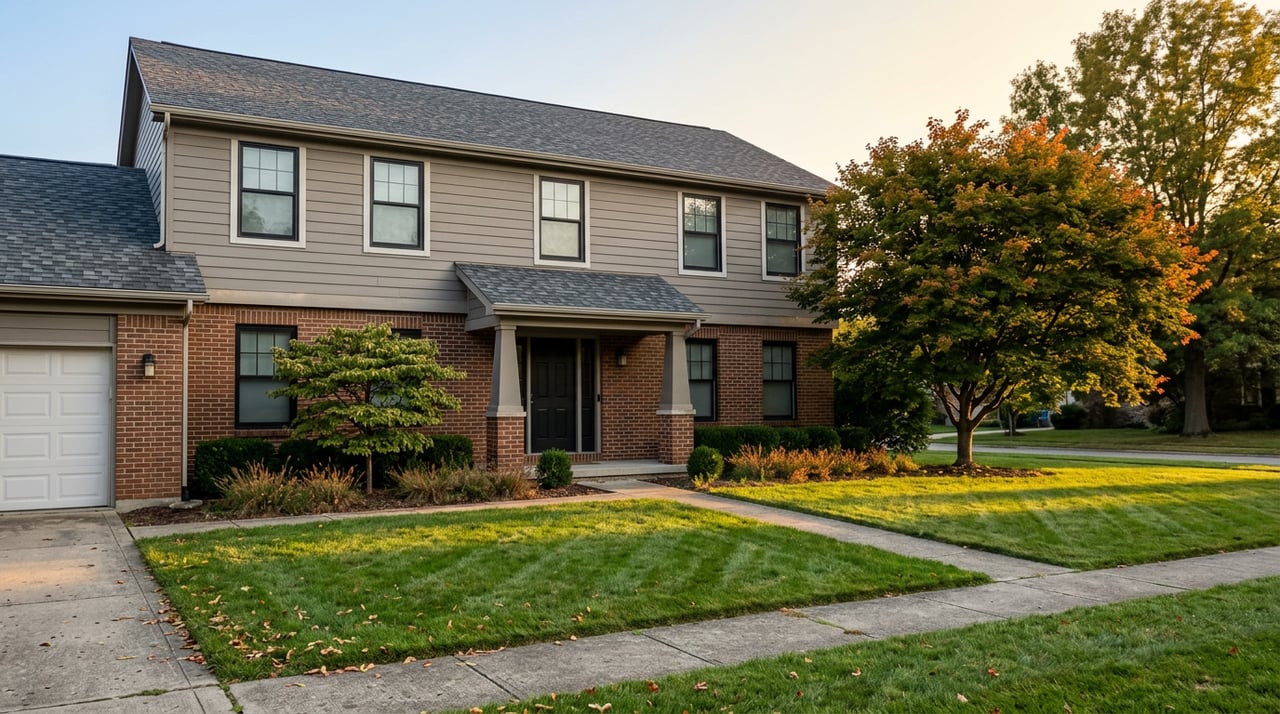
Picture a homeowner in Gentry Crossings pulling up a sale from two doors down last year, adding a little for good measure, and listing this fall with confidence. The regional news has been good. Sales are up double digits across the Louisville market. Prices are holding steady or climbing. Why would this listing be any different?
Then the showings slow. Forty days pass, then fifty. The offer that finally comes in asks for a price cut, not a bidding war. The seller pulls up the regional numbers again to make sense of it, and none of them explain what just happened.
They wouldn't. Bullitt County, where Gentry Crossings sits, is moving in the opposite direction from the market it gets grouped with every time someone quotes a Louisville-wide average.
The Number Everyone Quotes
In June 2026, the Greater Louisville Association of REALTORS reported that the 11-county region it tracks with APEX MLS closed 1,638 home sales, up 10.5 percent from 1,482 the year before. The regional median sale price held nearly flat at $304,400, compared with $305,000 in June 2025. Year to date, the region's median was actually up 3.5 percent, to $292,000. That's the version of the story that travels: Louisville is strong, prices are stable to rising, buyers should move quickly.
The Number Underneath It
Buried in the same GLAR report is a county-level breakdown, and Bullitt County tells a different story. Closed sales did rise there in June, up 8.4 percent, from 83 to 90. But new listings jumped 21.4 percent that same month, from 117 to 142, and active inventory climbed to 258 homes, up 48.3 percent from 174 a year earlier. The local median sale price fell 5.2 percent, from $335,000 to $317,500. Year to date, it's down 2.9 percent, to $301,000.
This wasn't a one-month blip. A month earlier, GLAR's May 2026 report showed the same shape: Bullitt County closings down 13 percent even as new listings rose 32 percent, and the local median sale price down from $313,500 to $280,000 year over year. GLAR President Rip Phillips summed up the shift plainly at the time:
"Today's buyers have more negotiating power and more homes to choose from than they did a year ago. At the same time, home values remain strong and well-positioned for homeowners considering a move. That's creating opportunities on both sides of the transaction."
Why More Listings Doesn't Mean a Hotter Market
It's tempting to read a jump in new listings as a sign of momentum. But new listings only turn into closings if buyer demand keeps pace, and in Bullitt County it hasn't. Closed sales of single-family homes are down 3.1 percent year to date, from 451 to 437, even as new listings for the year are up 23.5 percent, from 643 to 794. The gap between those two figures is what shows up as extra homes sitting active, extra days before a contract, and extra room for a buyer to ask for concessions. It isn't that fewer people want to live in Bullitt County. It's that more sellers decided to test the market at the same time, and the number of buyers didn't grow to match.
Two Numbers, Same Zip Code, Different Story
Mount Washington offers its own version of this tension, and it shows up in the gap between two kinds of housing data that get treated as interchangeable but aren't. Zillow's home value index for Mount Washington, an estimate of what the typical home is worth based on modeled values across the entire housing stock, put average value at $328,212 as of April 2026, up 2.7 percent over the prior year. Redfin's tracking of homes that actually sold tells a different story: over the three months ending June 2026, the median sale price in Mount Washington was $299,000, down 8.1 percent from the same period a year earlier, with homes taking an average of 42 days to sell compared with 35 days the year before. In June alone, 87 homes sold, down from 97 in June 2025.
Both numbers are accurate. They're measuring different things. A home value index estimates what every house in an area is theoretically worth whether or not it's for sale, and it moves slowly because it smooths years of appreciation across thousands of properties that never changed hands. A median sale price reflects only the homes that actually closed in a given window, and it swings when sellers start accepting less to get a deal done. Right now in Mount Washington, the transaction data is the one that matches what's happening on the ground: more supply, longer waits, and sellers settling for less than they would have last year.
What This Means If You're Listing in Gentry Crossings This Fall
A seller pricing off a year-old comp, or off a regional headline that says Louisville prices are climbing, is working from the wrong data set. Bullitt County's own numbers point to a market where supply is outrunning demand, which means a listing has to compete with every other home that came on the market alongside it, not just the one that sold last spring. That's not a reason to panic. It's a reason to price against what's actively for sale and pending in the county right now, not against what closed a year ago or what a regional index implies. A home valuation built on current local inventory tells a more honest story than either number on its own.
Three figures worth keeping in front of you before you list or write an offer near Gentry Crossings this fall:
- Bullitt County active inventory: 258 homes as of June 2026, up 48.3 percent from 174 in June 2025.
- Bullitt County median sale price: $317,500 in June 2026, down 5.2 percent from $335,000 the year before.
- Bullitt County closed sales, year to date: single-family closings down 3.1 percent even as new listings rose 23.5 percent.
What This Means If You're Buying
For buyers, the same numbers translate into real leverage. Rip Phillips's read on the region, more homes to choose from and more room to negotiate, applies with extra weight in Bullitt County specifically, where inventory grew faster than almost anywhere else in the GLAR footprint this year. That doesn't mean every seller will move the same amount on price. It means the conversation about price, repairs, and closing timeline starts from a different place than it did twelve months ago, and a buyer who knows the county numbers walks into that conversation better prepared than a seller who's still anchored to last year's market. The same dynamic shows up a few miles over in River Crest North, which sits in the same county and the same inventory story.
A Few Questions Worth Asking Before You Act
Does a falling median price mean Gentry Crossings homes are losing value for good? No. It means more sellers listed at once than buyers were ready to absorb this year, which is a supply story, not a statement about what the neighborhood is fundamentally worth. Median price is a snapshot of what happened to sell in a given window, not an appraisal of every house in it.
Should I wait to sell until the market catches up to the rest of Louisville? Waiting assumes Bullitt County will eventually track the region's pace, and there's no guarantee of when that happens or how long the wait costs you. Pricing to today's local inventory, rather than to a future the headlines haven't delivered yet, is the more reliable approach.
Numbers at the regional level and numbers at the county level can both be true and still point buyers and sellers in opposite directions. If you're trying to figure out what that actually means for a specific address near Gentry Crossings, whether you're pricing a listing or deciding how hard to push on an offer, Kelsey Reneau works these numbers block by block. Let's Connect.